
How to Spend Less Time on Your Phone Without Going Off-Grid
By Roy Kaden Roi on July 3, 2026

Most people don’t want to get rid of their smartphones.
Phones help us stay connected with family and friends, navigate unfamiliar places, manage our finances, work remotely, listen to music, read books, and capture important moments. In many ways, they’ve become one of the most useful tools we own.
The problem isn’t that we have phones.
It’s that many of us use them far more than we intend to. We unlock them to check one message and find ourselves scrolling twenty minutes later. We pick them up during meals, while watching television, waiting in line, or even during conversations. Before long, checking the phone becomes a habit rather than a conscious decision.
The good news is that you don’t have to abandon technology to build a healthier relationship with it. Small changes often make a bigger difference than extreme digital detoxes.
Notice when you’re using your phone out of habit
One of the first steps is becoming aware of why you’re reaching for your phone.
Sometimes you’re responding to an important message or looking up useful information. Other times, you’re simply bored, avoiding a task, filling a quiet moment, or picking it up automatically without thinking.
Try paying attention for a day.
Before unlocking your phone, ask yourself a simple question: What am I opening it for?
You’ll often discover that many phone checks happen without any real purpose at all.
Awareness is the first step toward changing the habit.
Turn off the notifications you don’t need
Notifications are designed to capture your attention.
Every vibration, sound, or banner creates the feeling that something needs your immediate response, even when it doesn’t. Over time, this constant interruption makes it difficult to focus on anything for very long.
Take a few minutes to review which apps are allowed to send notifications.
Most people don’t need shopping alerts, social media updates, or promotional messages appearing throughout the day. Keeping notifications only for genuinely important apps allows you to check your phone on your own terms instead of constantly reacting to it.
Sometimes protecting your attention is as simple as making your phone a little quieter.
Create phone-free moments
You don’t need to stop using your phone altogether.
Instead, choose a few parts of the day where it isn’t the centre of your attention.
Perhaps you leave it in another room during meals, avoid checking it for the first thirty minutes after waking up, or keep it away while reading, exercising, or spending time with family.
These small phone-free moments create opportunities to be more present without requiring dramatic lifestyle changes.
Often, you’ll notice you don’t miss your phone nearly as much as you expected.
Replace scrolling with something enjoyable
Simply telling yourself to use your phone less rarely works.
Habits are much easier to change when they’re replaced rather than removed.
Instead of automatically scrolling whenever you have a spare ten minutes, try reading a few pages of a book, taking a short walk, listening to music without looking at your screen, stretching, writing in a journal, or chatting with someone nearby.
The goal isn’t to eliminate downtime.
It’s to spend it more intentionally.
Keep your phone out of reach sometimes
Our environment influences our behaviour more than we realize.
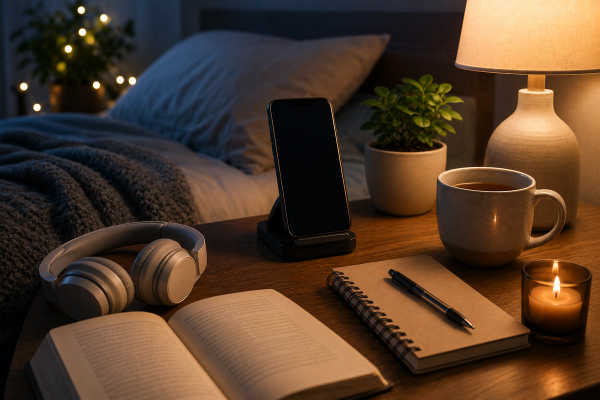
If your phone is always within arm’s reach, you’ll naturally check it more often. Leaving it in another room while working, placing it inside a bag when meeting friends, or charging it away from your bed at night creates just enough distance to break automatic habits.
You don’t have to hide it forever.
You simply make checking it a conscious decision instead of an unconscious reflex.
Small changes in your environment often produce surprisingly big results.
Stop treating every message as urgent
Many people feel pressure to reply immediately.
In reality, very few messages require an instant response.
Giving yourself permission to answer emails later, reply to messages when you’re free, or check social media only at certain times of the day reduces the feeling that you must always be available.
Being reachable doesn’t have to mean being constantly connected.
Healthy boundaries allow technology to serve your life instead of controlling it.
Use your phone more intentionally
Ironically, your phone can also help you spend less time on it.
Many devices include screen-time reports that show how much time you’re spending on different apps. Looking at these numbers without judgment can be eye-opening.
You may discover that most of your screen time comes from only one or two apps.
Once you know where your attention is going, you can decide whether those habits reflect how you actually want to spend your time.
Awareness often leads to better choices naturally.
Remember what you’re making room for
Spending less time on your phone isn’t really about reducing screen time.
It’s about creating more time for everything else.
Reading books. Having longer conversations. Walking without distractions. Playing with your children. Cooking dinner. Learning a new skill. Sleeping better. Simply noticing what’s happening around you.
The goal isn’t to remove technology from your life.
It’s to make sure it doesn’t quietly replace the experiences that matter most.
A healthier relationship with your phone is built gradually
You don’t need a dramatic digital detox or a weekend without technology to feel the benefits of using your phone more intentionally.
Small habits—turning off unnecessary notifications, creating phone-free moments, charging your phone away from your bed, and becoming more aware of why you’re reaching for it—often have a much greater long-term impact than extreme changes that are difficult to maintain.
In the end, your phone is one of the most useful tools you’ll ever own.
The key is making sure it remains a tool—not something that automatically decides how you spend your attention every day. When you use technology with intention instead of habit, you don’t just spend less time on your phone—you make more time for the life happening around you.






MORE IN TRENDING
How to Find Your Personal Style in 6 Steps
Sam Bitton .

How to Spot a Beauty Product That’s Actually Worth the Hype
Adi Liad .
The Privacy Settings Worth Changing on Every Device You Own
Roy Kaden Roi .

How to Spend Less Time on Your Phone Without Going Off-Grid
Roy Kaden Roi .

The Digital Habits of People Who Seem Calm Online
Jade Josef .